PROTEIN GUIDE · WHEY VS COLLAGEN GUMMIES
The protein number is only the beginning.
Whey and collagen can both appear as grams of protein on a gummy label, but their amino-acid profiles are different. Whey naturally supplies all essential amino acids. Collagen is incomplete on its own and serves a different nutritional role. The better choice depends on your goal, allergens and the evidence behind the finished product.
The quick comparison
Why “grams of protein” do not tell the whole story
The Nutrition Facts or Supplement Facts panel tells you how much protein is present. It does not, by itself, show the balance of essential amino acids in that protein source. Two gummies can therefore display similar front-label protein numbers while serving different nutritional purposes.
Whey is a complete milk protein. Collagen has a different amino-acid profile and is incomplete on its own. That does not make collagen useless; it means collagen and whey should not be presented as interchangeable simply because both contribute protein grams.
What human research can—and cannot—tell us
Controlled studies comparing whey and collagen have reported different post-exercise amino-acid and muscle-protein-synthesis responses. Those studies use specific participants, doses and beverage formats. They help explain why protein source matters, but they do not prove that one gummy product will create a particular training outcome.
For a gummy, the honest claims remain narrower: identify the protein source, declare the amount per full serving, disclose allergens and verify the finished formula.
THE USEFUL DISTINCTIONCollagen and whey can both add protein grams. They should not be treated as nutritionally equivalent proteins.
Why PROTEDY uses hydrolyzed whey isolate
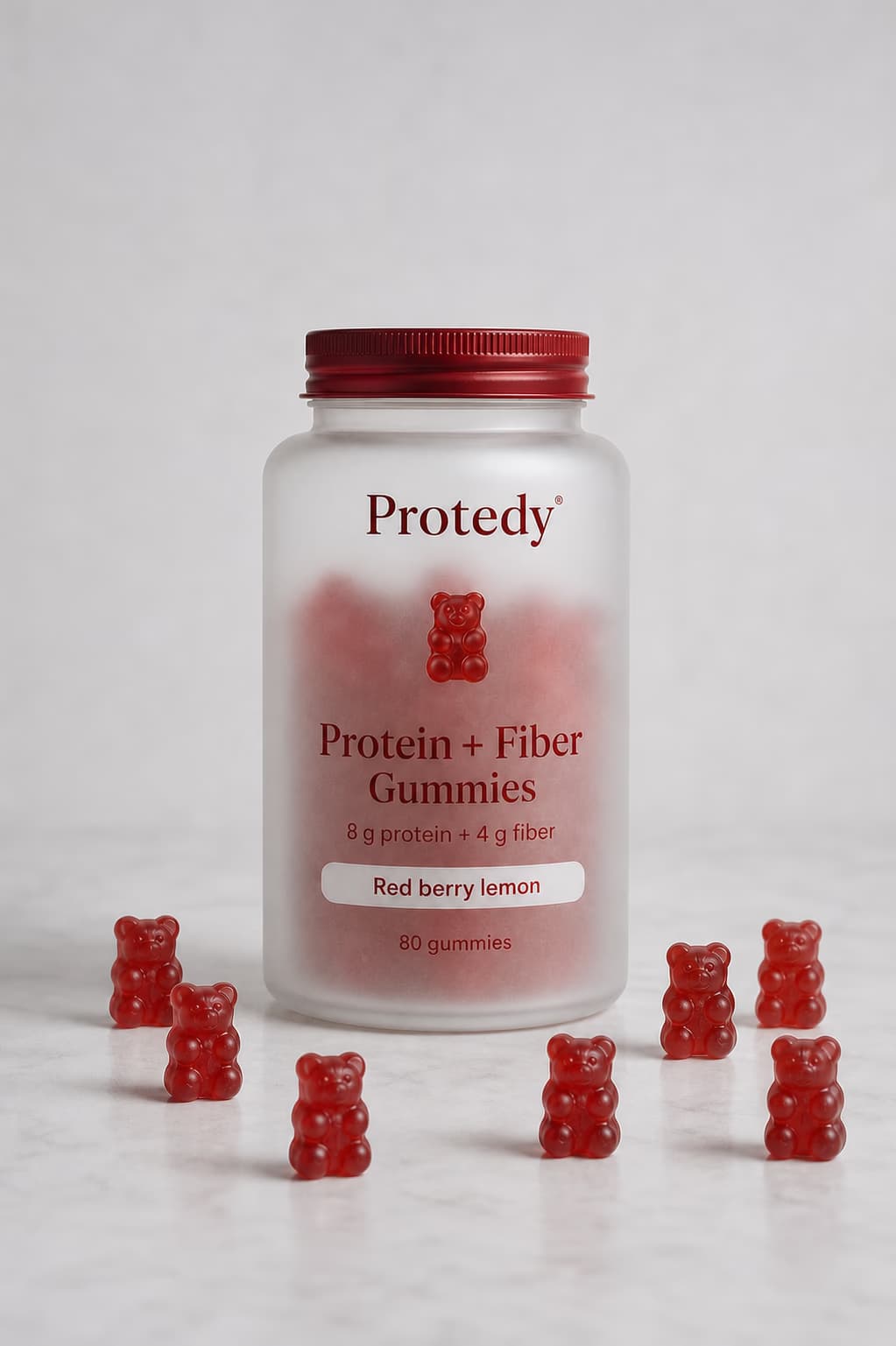
PROTEDY uses enzymatically hydrolyzed whey protein isolate as its protein source. The formula provides 8 g complete protein per eight-gummy serving and contains milk. Hydrolysis breaks the whey into smaller peptides before it enters the gummy; it does not make the product dairy-free.
The finished amino-acid profile supports the complete-protein description. See the full product details, ingredient and nutrition information, and quality summary.
A five-point label check
- Protein sourceLook for whey, collagen, gelatin, plant protein or a clearly disclosed blend.
- Full servingCompare the stated protein with the number of gummies required to obtain it.
- AllergensWhey contains milk; marine collagen can introduce a fish allergen.
- Complete-protein languageAsk whether the source naturally provides all essential amino acids or whether a blend is being used.
- Finished-product evidenceRaw-material specifications do not confirm the quantity present in the final gummy.
PRIMARY SOURCES
References
- Collagen Protein Ingestion during Recovery from Exercise Does Not Increase Muscle Connective Protein Synthesis RatesMedicine & Science in Sports & Exercise
- Effects of Whey, Pea, and Collagen Protein Supplementation on Myofibrillar Protein SynthesisThe Journal of Nutrition
- Protein and Amino Acid Profiles of Different Whey Protein SupplementsJournal of Dietary Supplements
These sources explain the general nutrition concepts discussed here. PROTEDY-specific quantities and quality statements are based on the finished-product specification and testing described on this website.
A SMALLER PROTEIN OCCASION
Meet the protein treat made for in-between moments.
PROTEDY combines 8 g complete whey protein and 4 g soluble fiber in soft Red Berry Lemon gummies. It does not replace a full shake. It gives you another format when you do not want one.