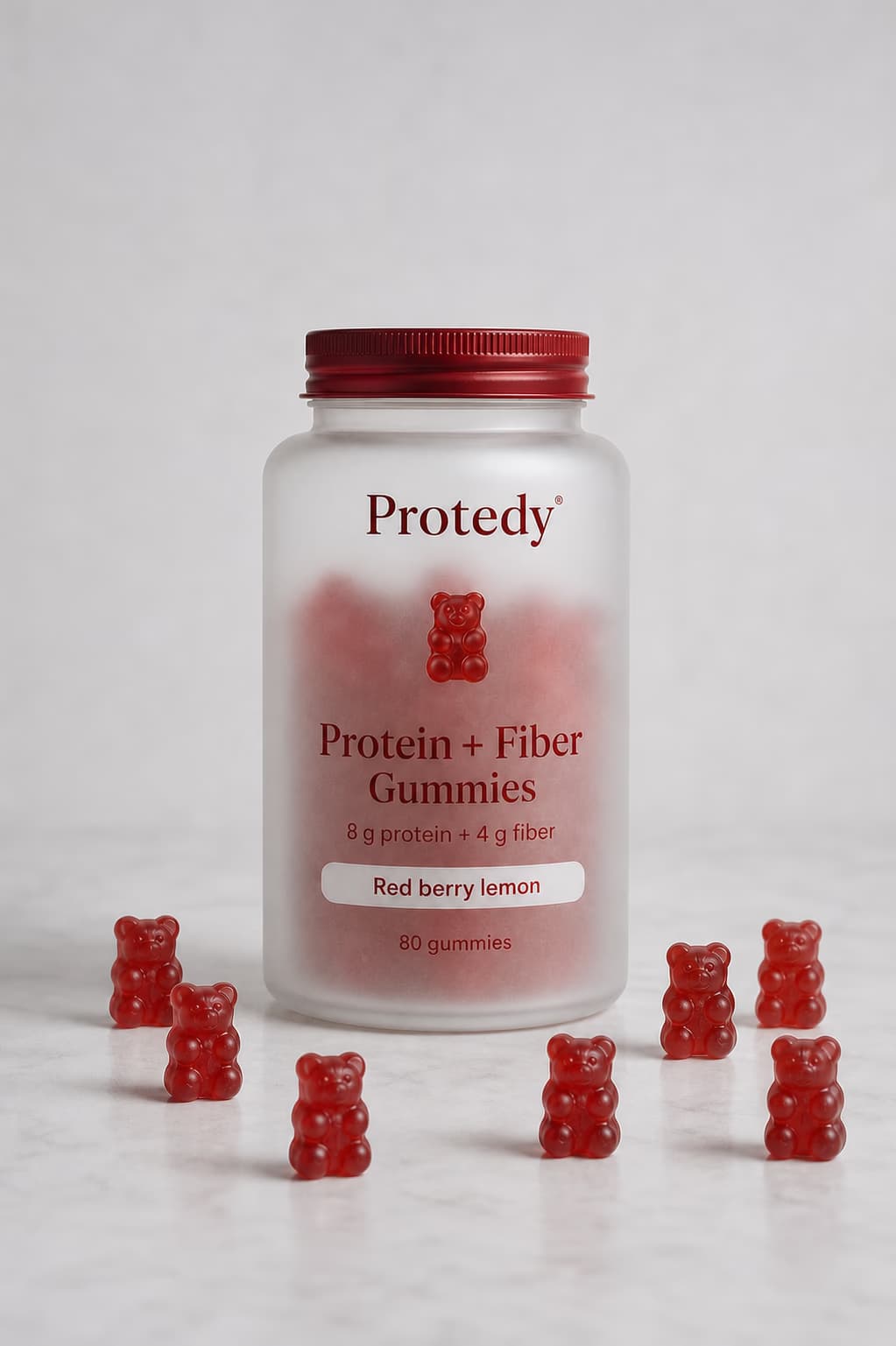
INGREDIENT GUIDE · PROTEIN GUMMIES WITH FIBER
Protein and fiber do different jobs. That is the point.
Protein supplies amino acids, while dietary fiber makes a separate nutritional contribution. In a gummy, both amounts should be declared for the full serving and traced to named sources. Check the serving size, protein quality, fiber type, sugars, allergens and finished-product evidence before deciding whether the formula is useful to you.

What each nutrient contributes
Protein
Protein supplies amino acids. The source determines whether it naturally provides all essential amino acids and how the product should be described.
Dietary fiber
Fiber contributes to daily fiber intake and can also provide useful structure and bulk in a gummy formula. It should be declared separately from protein.
The combination does not turn a gummy into a meal replacement. It creates a smaller snack format with two quantified nutritional contributions instead of relying on protein alone.
Why PROTEDY uses resistant dextrin
PROTEDY uses resistant dextrin as its main soluble-fiber source. It contributes 4 g dietary fiber per serving and allows the formula to keep a lighter flavor and texture than many heavily fiber-led systems.
The exact source matters because “fiber” is not one single ingredient. Inulin, polydextrose, resistant dextrin, pectin and other fibers behave differently in formulation and can feel different at a full serving. Ingredient transparency is more useful than a vague front-label claim.
What to check before buying protein gummies with fiber
- The full serving size.Nutrition numbers mean little if the serving is too large or unpleasant to finish.
- The named protein source.Whey is complete; collagen is not complete on its own.
- The named fiber source.Look beyond “with fiber” and read the ingredient list.
- Total and added sugar.These are separate values and should be shown per full serving.
- Allergens and suitability.Whey comes from milk, even when the gummy itself is made without gelatin.
- Finished-product evidence.Published results should support the declared protein and fiber amounts.
DO NOT OVERREAD THE FORMULAFour grams of fiber is a useful contribution. It is not permission to promise digestive comfort, appetite control or a medical outcome without specific evidence.
How protein quality fits the picture
PROTEDY uses enzymatically hydrolyzed whey protein isolate. Hydrolysis breaks the protein into smaller peptides before it enters the gummy. The finished amino-acid profile supports describing the protein as complete.
This is different from using collagen as the primary protein and allowing the front of the package to do all the explaining. The formula section names the full ingredient line, and the quality section explains the finished-product checks.
Does fiber make protein gummies “healthy”?
No single ingredient makes a product healthy for everyone. That word can also have a specific regulatory meaning when used as a product claim. A more useful approach is to look at the actual serving: protein, fiber, calories, sugars, allergens, ingredients and how it fits your overall diet.
For PROTEDY, the intended role is narrow: a premium, fruit-forward protein and fiber treat. It is not a complete meal, a medical product or the lowest-cost way to increase protein.
PRIMARY SOURCES
References
- Questions and Answers on Dietary FiberU.S. Food and Drug Administration
- Declaration of Certain Non-Digestible Carbohydrates as Dietary FiberU.S. Food and Drug Administration
- Added Sugars on the Nutrition Facts LabelU.S. Food and Drug Administration
These sources explain the general nutrition concepts discussed here. PROTEDY-specific quantities and quality statements are based on the finished-product specification and testing described on this website.
A SMALLER PROTEIN OCCASION
Meet the protein treat made for in-between moments.
PROTEDY combines 8 g complete whey protein and 4 g soluble fiber in soft Red Berry Lemon gummies. It does not replace a full shake. It gives you another format when you do not want one.